

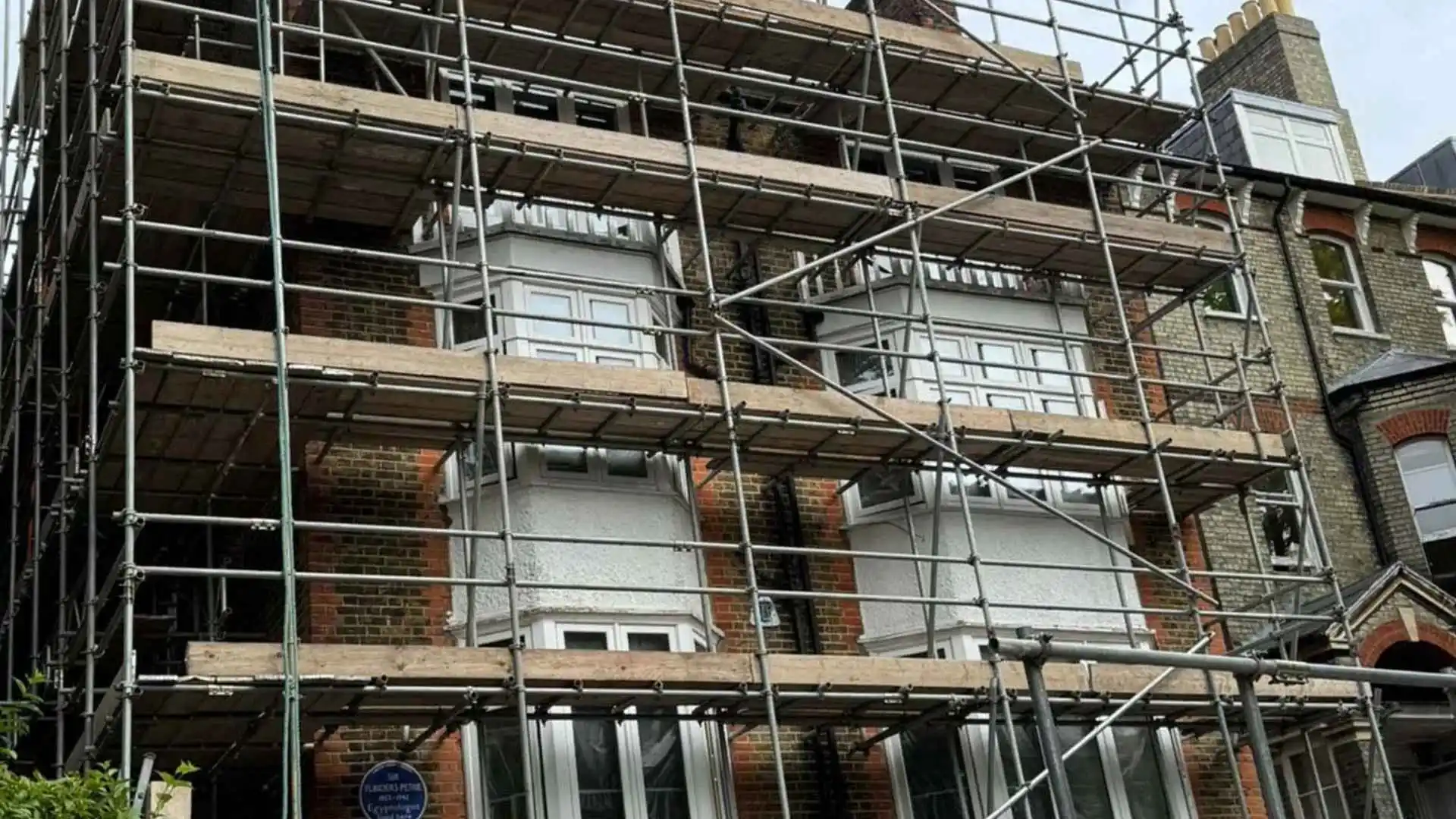

Planning external works across a London social housing estate? Discover how housing associations and local authorities can plan, procure, and deliver external works programmes that protect assets, meet compliance, and improve resident satisfaction.
External works across a London social housing estate is one of the most complex and consequential programmes a housing association or local authority can undertake. You are working on occupied properties, managing resident expectations, navigating compliance obligations, and trying to deliver a programme that protects your stock for the next twenty to thirty years.
When external works programmes go wrong, the consequences are serious. Costs overrun. Residents complain. Regulatory inspections expose gaps in your compliance record. And the stock you invested in ends up in worse condition than when you started.
When external works programmes go right, the results are transformational. Your stock condition improves. Your EPC ratings rise. Your responsive repair volumes fall. And your residents feel genuinely proud of where they live.
This guide sets out exactly how to plan external works across a London social housing estate so your programme delivers the results it should.
Start With Accurate Stock Condition Data
Every external works programme that delivers consistently good outcomes starts in the same place. Accurate, granular, up to date stock condition data.
Why Stock Condition Data Drives Everything
Without reliable data on the age, condition, and remaining life expectancy of every external component across your estate, you cannot prioritise works sensibly, plan budgets accurately, or sequence your programme in a way that maximises value and minimises disruption.
Housing associations that plan external works programmes without current stock condition data consistently overspend on properties that do not need intervention and underspend on properties that do. Consequently, they generate unnecessary responsive repairs, miss compliance obligations, and deliver programmes that do not hold up under regulatory scrutiny.
If your stock condition survey data is more than three years old, commission a fresh survey before you begin programme planning. The cost of a survey is trivial compared to the cost of a poorly targeted external works programme across a London estate.
Build a Prioritised Programme From Your Data
With accurate stock condition data in hand, the next step is translating that data into a structured, prioritised external works programme. This is where many London housing associations struggle.
Prioritise by Risk, Not Just Age
The most common prioritisation mistake in external works planning is treating component age as the primary driver of intervention timing. Age matters, but condition and risk matter more.
A thirty year old flat roof in good condition with no signs of failure presents far lower risk than a twenty year old flat roof with active water ingress causing damage to the structure below. Prioritise your programme around condition and risk, using age as a secondary indicator that informs your forward planning rather than your immediate intervention decisions.
Furthermore, prioritise works that have direct compliance implications ahead of those that are purely cosmetic or preventative. Properties with damp caused by external wall failures, windows that breach thermal performance requirements, or cladding that carries fire safety concerns demand immediate attention regardless of where they sit in an age-based programme cycle.
Prioritise by Risk, Not Just Age
The most common prioritisation mistake in external works planning is treating component age as the primary driver of intervention timing. Age matters, but condition and risk matter more.
A thirty year old flat roof in good condition with no signs of failure presents far lower risk than a twenty year old flat roof with active water ingress causing damage to the structure below. Prioritise your programme around condition and risk, using age as a secondary indicator that informs your forward planning rather than your immediate intervention decisions.
Furthermore, prioritise works that have direct compliance implications ahead of those that are purely cosmetic or preventative. Properties with damp caused by external wall failures, windows that breach thermal performance requirements, or cladding that carries fire safety concerns demand immediate attention regardless of where they sit in an age-based programme cycle.
Segment Your Programme Into Waves
Once you have a prioritised list of interventions, segment your external works programme into delivery waves. Wave one covers properties requiring immediate intervention for compliance or safety reasons. Wave two covers properties approaching end of component life within the next three to five years. Wave three covers properties with remaining life expectancy beyond five years that can be maintained rather than replaced in the current programme cycle.
This segmentation gives your programme a clear shape, a manageable annual delivery volume, and a capital spend profile that your finance team can plan around. It also gives your procurement team time to develop the right contracting arrangements for each wave before delivery pressure arrives.
Understand Your Compliance Obligations Before You Design the Programme
External works on London social housing estates carry a complex web of compliance obligations. Understanding these obligations before you finalise your programme design prevents costly redesigns and delays once delivery is underway.
Decent Homes Standard
The Decent Homes Standard requires that all social housing meets minimum condition thresholds across key components including roofing, windows, doors, and external walls. Your external works programme must be designed to bring all non-decent stock up to standard within a defined timescale. Furthermore, properties that slip below the Decent Homes threshold due to component failure during the programme period need an accelerated intervention pathway to prevent regulatory compliance gaps.
Building Safety Act and Cladding Compliance
If your London social housing estate includes buildings over eleven metres in height, the Building Safety Act 2022 creates specific obligations around external wall systems, cladding materials, and structural safety that directly affect your external works programme design.
Any external works programme on a higher risk building must be developed in close consultation with your building safety manager and your principal contractor. Design decisions, material specifications, and delivery sequencing all carry heightened regulatory significance on higher risk buildings that does not apply to lower-rise stock. Getting this wrong does not just create compliance risk. It creates personal liability for named duty holders under the Act.
Fire Safety and External Wall Systems
Post-Grenfell fire safety requirements have fundamentally changed the compliance landscape for external works on London social housing estates. Any programme involving external wall repairs, overcladding, or insulation installation on a building of any height must include a full external wall assessment before design work begins.
The external wall assessment identifies the composition of the existing external wall system, any combustible materials within it, and the fire performance of any proposed new materials. Your principal contractor must be able to demonstrate competence in fire-safe external wall design and installation before you appoint them to any programme involving wall systems on your London estate.
Design Your Programme for Resident Welfare
External works across an occupied London social housing estate directly affects the daily lives of your residents. A programme that ignores this reality generates complaints, access failures, and reputational damage that undermines the very outcomes you are trying to achieve.
Appoint a Dedicated Resident Liaison Function
Resident liaison is not a nice-to-have in an external works programme. It is an operational necessity. Appoint a dedicated resident liaison team before works start on site. Their role is to communicate the programme to residents clearly and proactively, manage access arrangements for works that require entry to individual properties, respond to resident queries and concerns within defined timescales, escalate complaints to the programme manager before they reach formal grievance stage, and collect resident satisfaction data throughout the programme.
A well-resourced resident liaison function reduces access failures, reduces formal complaints, and improves the overall efficiency of your programme by keeping relationships between your contractor’s operatives and your residents positive and productive throughout delivery.
Plan Your Resident Communications in Advance
Do not wait until works are about to start before you communicate with residents. Give residents a minimum of four weeks notice before works begin on their block or property. Send clear, jargon-free letters that explain what works are being carried out, why they are necessary, how long they will take, what disruption residents can expect, and who to contact if they have questions or concerns.
Repeat communications at each new phase of the programme. Residents who feel informed and respected by their housing association throughout an external works programme report significantly higher satisfaction scores than those who feel surprised or excluded by works happening around their homes.
Support Vulnerable Residents Proactively
Every London social housing estate includes residents whose vulnerability means they need additional support during an external works programme. Elderly residents, residents with physical or mental health conditions, residents with young children, and residents for whom English is not a first language all benefit from tailored communication and additional pastoral support during disruptive external works.
Identify vulnerable residents at the programme planning stage using your tenancy management data. Brief your resident liaison team on their specific needs before works begin. Check in with vulnerable residents proactively throughout the programme rather than waiting for them to raise concerns.
Procure the Right Contractor for Your Programme
The contractor you appoint to deliver external works across your London social housing estate determines the difference between a programme that hits its targets and one that generates years of disputes, defects, and dissatisfied residents.
Assess Programme Management Capability
Many contractors can carry out individual external works repairs competently. Far fewer can manage a rolling programme of external works across a large, occupied London social housing estate, hitting weekly output targets, maintaining quality consistency, managing resident liaison effectively, and reporting accurately against KPIs throughout a multi-year contract.
When evaluating tenders for your external works programme, weight your scoring heavily toward programme management capability, resident liaison methodology, supply chain resilience, and evidence of comparable programme delivery on London social housing estates. Price matters, but it is a poor indicator of programme delivery capability on its own.
Consider a Framework or Long Term Contract
For external works programmes running three years or longer, a framework agreement or long term contract delivers better value than annual re-tendering. It gives your contractor the confidence to invest in the right staffing, supply chain, and systems for your programme. In return, you benefit from price stability, improving performance as your contractor learns your stock and your residents, and a genuine long term partnership focused on outcomes rather than individual contract periods.
At Precise Enterprise, we work with London housing associations and local authorities on exactly this basis, delivering structured, long term external works programmes that improve with every year of delivery.
Set Up Performance Management From Day One
An external works programme without robust performance management quickly drifts from its targets. Set up your KPI framework and reporting structure before your contractor mobilises, not after problems have already emerged.
The Right KPIs for External Works Programmes
Measure your external works programme against weekly and monthly output targets by work type and block, quality pass rate at practical completion inspection, defect rate within the first twelve months of completion, resident satisfaction score collected at block completion, compliance check completion rate, and programme spend against budget by period and cumulative.
Review these KPIs monthly with your contractor and your asset management team. Identify the causes of underperformance at the earliest possible stage and agree corrective actions with defined timescales before underperformance becomes entrenched.
Why Choose Precise Enterprise for External Works Across London Social Housing?
At Precise Enterprise, we deliver external works programmes for housing associations and local authorities across all London boroughs. Our programme based delivery model covers roofing, cladding, brickwork, rendering, external wall insulation, window and door replacement, drainage, and communal area works, all managed under a single programme with transparent reporting and consistent delivery performance.
We bring dedicated programme management, an experienced resident liaison team, and a proven supply chain that maintains output and quality consistently across large, occupied London social housing estates. Whether you are planning your first major external works programme or looking to improve performance on an existing contract, Precise Enterprise has the experience and the capacity to help.
Ready to Plan Your External Works Programme in London?
Contact Precise Enterprise today to discuss your external works requirements. We work with housing associations and local authorities across all London boroughs to design and deliver external works programmes that protect your stock, meet your compliance obligations, and improve outcomes for your residents.