

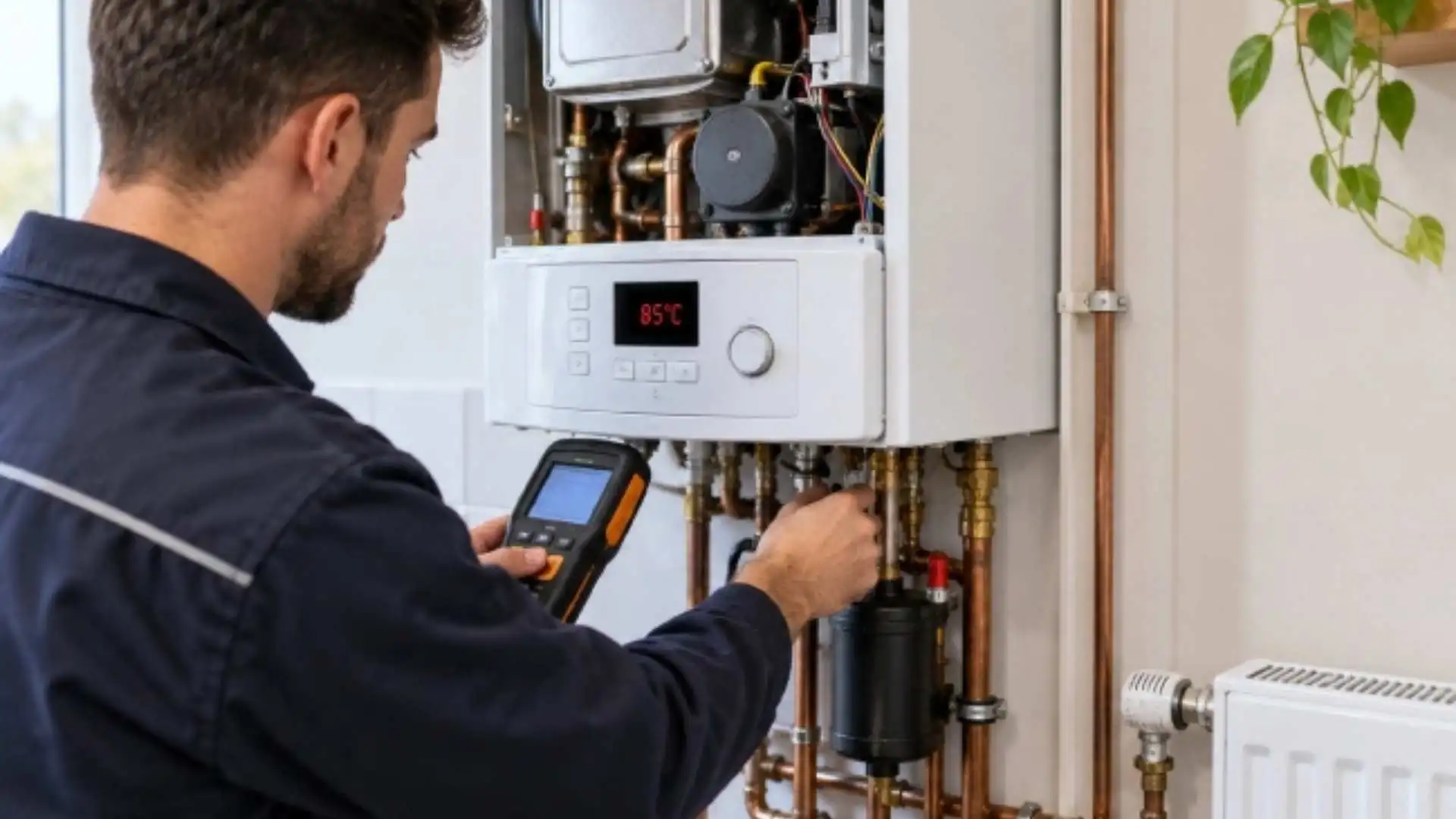

Heating failures in winter now carry strict legal timescales for social landlords. See how to investigate and make a home safe within 24 hours, step by step.
A boiler breaks on a freezing night. A family has no heat and no hot water. In the past, that was an urgent repair. From 30 November 2026, it can also be a legal test.
Heating failures in winter now sit inside Awaab’s Law. Excess cold joins damp and mould as a hazard with fixed deadlines. If a failure is an emergency, you have 24 hours to investigate and make the home safe.
This guide explains how the clock works and how to meet it.
Why Heating Failures in Winter Are Now a Legal Risk
Phase 2 adds excess cold
Phase 1 of Awaab’s Law began on 27 October 2025. It covers damp and mould and all emergency hazards. Phase 2 starts on 30 November 2026 and adds excess cold, excess heat, falls, structural collapse, fire, electrical hazards and domestic hygiene.
Tenants can take legal action for breach of contract. They can also complain to the Housing Ombudsman.
Broken boilers are a named example
The government’s guidance lists broken boilers among hazards that could be emergencies. It adds that a broken boiler is likely to be more severe in colder months. So the same fault may need a different response in July than in January.
The 24 Hour Clock, Step by Step
The clock starts when you become aware
Your duty begins when you become aware of a potential hazard. That can happen through a tenant call, a housing officer, a regulator or a third party. It can also happen through your own staff.
Contractors need care. If a contractor acts as your agent, their knowledge may count as yours. So give contractors clear instructions to report any hazard they see.
Triage with the tenant in mind
Awaab’s Law looks at the real household, not a notional tenant. Ask who lives there. Check for children, older adults and anyone with a health condition. Ask whether the cold affects use of essential rooms.
Tenants do not need to give medical evidence. The guidance says to take reported vulnerabilities at face value. Record what you learn.
Investigate and make safe within 24 hours
For an emergency hazard, the investigation and the safety work must both finish within 24 hours of becoming aware. Investigations can be remote, such as by video. But a heating fault usually needs an engineer on site.
Use a competent person. A gas fault needs a Gas Safe engineer. An electrical fault needs a qualified electrician.
Gas leaks and carbon monoxide have their own, possibly shorter, rules. Where another law sets a faster deadline, the shorter one applies.
Temporary measures count
Safe does not always mean fully repaired. The guidance accepts temporary measures to remove the immediate risk. Portable heaters while you fix a boiler are one example it gives.
Do not expect tenants to buy heaters or dehumidifiers. Landlords should provide them. Keep the property in that safe state until the permanent work is done.
What Happens After the First 24 Hours
The written summary
After an investigation, you usually owe the tenant a written summary within 3 working days. It must say whether a hazard was found, what action follows, and when you plan to start and finish.
There is one exception. If you fix everything within the 3 working days, you do not need a summary. You must still tell the tenant the work is complete.
Permanent and preventative work
Preventative work stops the hazard returning. Begin it within 5 working days of the investigation ending, or take steps to begin it. If that is not possible, it must start as soon as reasonably practicable, and within 12 weeks.
For heating, that might mean a full boiler replacement, pipework repair, radiator work or insulation to cut heat loss.
Alternative accommodation
If you cannot finish the safety work within the timeframe, you must secure suitable alternative accommodation at your expense. Plan for this before winter. A hotel list on the day is too late.
Common Problems That Break the Clock
Access
You cannot fix what you cannot reach. Offer several time slots. Try phone, email and letters. Leave a card if you miss the tenant. Log every attempt.
The law gives a defence if you used all reasonable endeavours. Records are your evidence.
Parts and engineer capacity
A van without the right boiler part turns a one visit fix into a two day failure. Stock common spares. Check how many gas engineers can attend at night, and how winter peaks affect that.
Communal heating
London has many estates with shared plant. The guidance says a hazard from a communal system that you do not control may be out of scope. Even then, you should take reasonable steps with the responsible party. Treat it as your problem anyway, because the tenant will.
Build a Winter Ready Heating Service
Here is a short checklist to use before 30 November.
- Update triage scripts so call handlers spot no heating, no hot water and vulnerable households.
- Confirm out of hours engineer cover by borough, with response times in writing.
- Stock boiler parts and spare heaters in vans and depots.
- Brief contractors on reporting duties and evidence.
- Prepare written summary templates. The government has published one.
- Set up an accommodation route for jobs you cannot finish in time.
- Review ageing boilers and replace the weakest before cold weather bites.
That last point matters most. Repair speed helps, but fewer failures help more. A planned heating renewal programme cuts the number of emergencies you face. The new Decent Homes Standard also lists heating systems as key components, so the investment serves two goals.
How Precise Enterprise Helps
Precise Enterprise supports housing associations and local authorities across London with:
- 24/7 reactive maintenance and emergency response
- Planned maintenance programmes, including heating and K&B renewals
- Void refurbishment to a compliance-led standard
- Resident liaison, access management and clear reporting
We help you meet the 24 hour test and reduce how often you face it.
Prepare Before 30 November
Heating failures in winter will never disappear. Your response can be ready. Landlords with sound triage, reliable engineers and a renewal pipeline will cope. Those without will face breaches, complaints and cost.
Contact Precise Enterprise to review your heating and reactive repair arrangements before Phase 2 begins. We cover all London boroughs.