

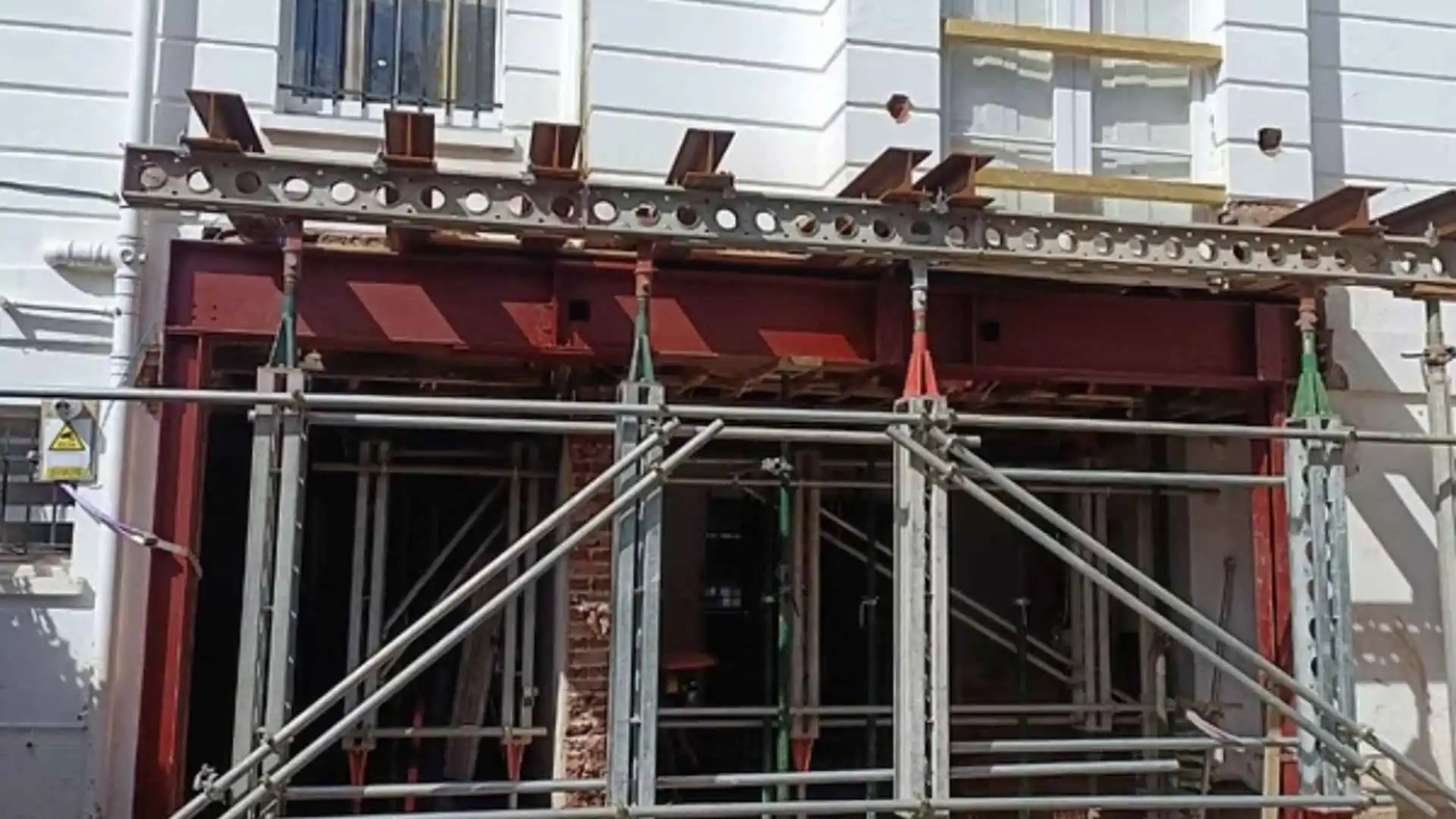

Planning a structural works programme for London social housing? Discover how housing associations and local authorities can plan, procure, and deliver structural works that protect assets, meet compliance, and improve resident safety across all London boroughs.
Structural works in London social housing sit at the top of any responsible asset management agenda. When the structural integrity of your stock is compromised, everything else follows. Tenant safety is at risk. Compliance obligations cannot be met. Asset values deteriorate. And the cost of eventual intervention escalates far beyond what timely planned action would have required.
Yet structural works programmes remain among the most complex and most frequently deferred elements of planned maintenance investment in London social housing. The technical demands are significant. The compliance landscape is demanding. The operational challenges of delivering structural works in occupied properties are real. And the capital investment required is substantial.
This guide sets out exactly how to plan a structural works programme for London social housing that protects your assets, meets your compliance obligations, and delivers safe, decent homes for your tenants over the long term.
Why Structural Works Planning Matters More Than Ever
The regulatory environment for structural works in London social housing has never been more demanding. Several converging pressures make structured planning an absolute necessity rather than a professional aspiration.
The Building Safety Act 2022
The Building Safety Act 2022 fundamentally changed the compliance landscape for structural works in London social housing, particularly for buildings over eleven metres in height. The Act created new dutyholder roles, new obligations around structural safety assessment and remediation, and new regulatory powers for the Building Safety Regulator to inspect, intervene, and enforce against registered providers who cannot demonstrate adequate management of structural safety risks across their portfolio.
For London housing associations and local authorities with higher risk buildings in their portfolio, a structural works programme is not optional. It is a statutory requirement that carries personal liability for named dutyholders when it is absent, inadequate, or poorly implemented.
The Decent Homes Standard and Structural Condition
The Decent Homes Standard requires that all social housing is structurally stable, free from serious hazards, and maintained in a reasonable state of repair. Structural defects including foundation movement, concrete deterioration, failing lintels, and water ingress through the structural envelope all create Decent Homes compliance failures that the Regulator of Social Housing expects registered providers to address proactively.
Housing associations that cannot demonstrate a credible, funded structural works programme increasingly face regulatory scrutiny, consumer standards assessments, and in serious cases, regulatory intervention that carries significant reputational and operational consequences.
Step One, Understand Your Stock Through Accurate Survey Data
Every effective structural works programme starts with accurate, current, and granular data on the structural condition of your London social housing portfolio. Without this data, you cannot prioritise works credibly, plan budgets accurately, or demonstrate to the Regulator of Social Housing that you understand the condition of your stock.
Commission a Comprehensive Structural Survey
If your stock condition data is more than three years old or does not specifically address structural elements in sufficient detail, commission a comprehensive structural survey before you begin programme planning.
A structural survey for social housing planning purposes should assess foundation condition and any evidence of movement or subsidence, the structural frame condition including concrete, masonry, and steel elements, the condition of lintels, beams, and load-bearing walls throughout the stock, evidence of damp ingress and its structural implications, the condition of roofing structures including rafters, joists, and flat roof decks, drainage integrity and its relationship to structural performance, and any specific higher risk building assessments required under the Building Safety Act.
Survey data must be captured in a format that feeds directly into your asset management system. This enables you to sort, filter, and prioritise structural works by defect type, severity, property, and block, giving you the planning intelligence you need to build a credible, funded programme.
Categorise Defects by Urgency and Risk
Not all structural defects carry the same urgency or risk profile. Your survey data should enable you to categorise defects across at least three priority bands.
Immediate risk defects present an active threat to the safety of tenants or the structural stability of the building and require urgent intervention outside the planned programme cycle. Planned intervention defects are not immediately dangerous but will deteriorate to a safety risk within the programme period if not addressed through planned works. Monitored defects require regular inspection and condition recording but do not yet require active intervention.
This categorisation gives your programme a clear shape. Immediate risk items go to emergency works. Planned intervention items drive your programme volumes and capital spend profile. Monitored items inform your forward planning for future programme cycles.
Step Two, Build a Prioritised and Funded Programme
With accurate survey data in hand, the next step is translating that data into a structured, prioritised structural works programme with a realistic capital budget attached to it.
Prioritise by Risk and Compliance Obligation
Prioritise your structural works programme around risk and compliance obligation rather than purely around component age or survey date. Properties with active structural safety concerns, Decent Homes compliance failures, or Building Safety Act obligations take precedence regardless of where they sit in a conventional life cycle replacement model.
Within your planned intervention category, prioritise works that address the highest risk deterioration trajectories first. Concrete carbonation affecting reinforcement, active foundation movement, and failing structural lintels over openings all carry higher risk escalation potential than cosmetic structural defects that deteriorate slowly.
Furthermore, cluster your programme geographically where possible. Delivering structural works across a concentrated group of properties in the same estate or block significantly reduces mobilisation costs, scaffolding costs, and programme management overhead compared to dispersing individual works across a wide geographic area.
Build a Realistic Capital Budget
Structural works programmes in London social housing carry significant capital cost implications that require early engagement with your finance team to ensure the programme is funded adequately before commitment to delivery.
Here is a realistic guide to structural works costs in London social housing:
| Works Type | Estimated Cost Range |
|---|---|
| Structural crack repair and monitoring | £500 to £3,000 per property |
| Lintel replacement programme | £800 to £2,500 per opening |
| Underpinning per property | £10,000 to £30,000 |
| Concrete repair per m2 | £150 to £400 per m2 |
| Structural roofing works per property | £5,000 to £15,000 |
| Foundation drainage works | £3,000 to £8,000 per property |
| Structural frame repair per block | £50,000 to £500,000+ |
Always build a contingency of fifteen to twenty percent into your structural works capital budget. Structural works in older London social housing stock frequently reveal additional defects once investigation and opening up works begin.
Step Three, Address Your Compliance Framework Before You Design the Programme
Structural works in London social housing carry a complex set of compliance obligations that must be understood and embedded into your programme design before works begin on site.
Building Safety Act Obligations for Higher Risk Buildings
If your London social housing portfolio includes buildings over eleven metres in height, the Building Safety Act 2022 creates specific obligations that directly affect your structural works programme. You must register all higher risk buildings with the Building Safety Regulator. You must appoint a Principal Accountable Person and an Accountable Person for each higher risk building. You must develop and maintain a Safety Case Report that demonstrates how structural safety risks are identified, assessed, and managed. And you must ensure that any structural works on higher risk buildings are designed and delivered by competent dutyholders who understand their obligations under the Act.
Structural works programmes on higher risk buildings that are developed without reference to these obligations create legal and regulatory risk for your organisation and personal liability for named dutyholders that cannot be managed away after the fact.
Building Regulations and Structural Approvals
All structural works in London social housing require Building Regulations approval. Your structural works contractor must notify Building Control before work begins and at key inspection stages throughout the project. At completion, you must obtain Completion Certificates for all notifiable works across your programme.
Furthermore, all structural works must be designed by a suitably qualified and experienced structural engineer. Design drawings and calculations must be reviewed and approved by Building Control before work proceeds. A structural works programme that bypasses this process creates serious compliance risk that will be exposed during regulatory inspection and at the point of stock transfer or disposal.
Step Four, Plan for Delivery in Occupied Properties
Structural works in occupied London social housing properties present operational challenges that must be planned for carefully. Failure to plan for the occupied nature of the stock is one of the most common causes of programme delay, cost overrun, and tenant complaint in structural works delivery.
Develop a Robust Resident Liaison Strategy
Structural works are among the most disruptive interventions a housing association can carry out in an occupied property. Scaffolding erection, opening up works, heavy materials handling, and extended programme durations all create disruption that tenants experience intensely.
Appoint a dedicated resident liaison function before works begin on any block or estate. Your liaison team should contact every affected tenant a minimum of four weeks before works start, explain what works are being carried out and why, confirm the expected programme duration and the likely daily impact on the property, identify any vulnerabilities or access requirements that need to be managed proactively, and provide a named contact for tenant queries and concerns throughout the works.
Resident liaison that is inadequate or reactive generates formal complaints, access failures, and political pressure that disrupts programme delivery far more than the structural works themselves.
Plan Decants and Temporary Accommodation Early
Some structural works require temporary decanting of tenants to allow works to proceed safely. Foundation underpinning, major concrete frame repairs, and structural wall removal all potentially require tenants to vacate properties temporarily.
Identify properties requiring decants at the programme planning stage using your survey data and your structural engineer’s advice. Engage your housing management team early to plan temporary accommodation and manage the decant process proactively. Leaving decant management to your structural works contractor creates conflict, delays, and tenant distress that damages your organisation’s reputation and your programme’s efficiency.
Step Five, Choose the Right Structural Works Contractor
The contractor you appoint to deliver your structural works programme determines whether it succeeds or fails. Structural works in London social housing demand a contractor with specific technical competence, proven programme delivery capability, and genuine understanding of the social housing operating environment.
Assess Technical Competence and Accreditation
Structural works require specialist technical competence that not every construction contractor possesses. Assess your shortlisted contractors against their specific experience with the structural defect types your programme addresses, their structural engineering design capability or relationships with qualified structural engineers, their accreditations including CSCS, CHAS, Constructionline, and any specialist structural repair accreditations, and their track record of compliance with Building Regulations and Building Safety Act obligations on comparable programmes.
A contractor who cannot demonstrate specific technical competence in the structural works your programme requires is a risk regardless of their general construction experience or competitive pricing.
Evaluate Programme Management and Reporting Capability
Structural works programmes across large London social housing portfolios require sophisticated programme management capability. Your contractor must demonstrate how they sequence works across multiple properties simultaneously, how they manage specialist subcontractors including structural engineers and specialist repair contractors, how they report programme progress and compliance against KPIs, and how they manage variations and unexpected structural discoveries without disrupting the wider programme.
Ask shortlisted contractors for examples of programme reports from comparable social housing structural works contracts. Good reporting gives you the visibility you need to hold your contractor accountable and demonstrate programme delivery to your board, your tenants, and the Regulator of Social Housing.
Step Six, Embed Quality Assurance Throughout Delivery
Structural works carry long term consequences for your stock condition and your tenants’ safety that make quality assurance a non-negotiable programme requirement.
Independent Inspection and Sign Off
Do not rely solely on your contractor’s own quality assurance processes. Appoint an independent clerk of works or contract supervisor with structural engineering knowledge to carry out inspections at critical programme stages. These stages include opening up and investigation, structural repair installation, concrete repair application, waterproofing installation, and practical completion of each property.
Independent inspection protects your organisation against defective works that might otherwise remain hidden until they generate further structural problems or compliance failures. A reputable structural works contractor welcomes independent inspection as evidence of quality they are proud of.
Maintain a Complete Compliance and Works Record
For every property in your structural works programme, maintain a complete record covering the structural survey findings that triggered the works, the structural engineer’s design drawings and calculations, the Building Regulations notifications and inspection records, the materials specifications and installation records, the photographic evidence of works at key stages, and the Completion Certificate issued at practical completion.
This documentation protects your organisation during regulatory inspections, supports your Safety Case Reports for higher risk buildings, and gives you the asset data you need for future structural works planning.
Why Choose Precise Enterprise for Structural Works in London Social Housing?
At Precise Enterprise, we deliver structural works programmes for housing associations and local authorities across all London boroughs. Our experienced team works on all structural defect types across all London social housing property types, from Victorian terraces and post-war estates to high-rise blocks and modern mixed tenure developments.
We bring dedicated programme management, experienced structural trade operatives, a committed resident liaison team, and transparent performance reporting to every structural works programme we deliver. We understand the regulatory environment London social housing operates in and design our structural works service to support Building Safety Act compliance, Decent Homes obligations, and the Regulator of Social Housing’s expectations on every programme we manage.
Whether you are planning your first major structural works programme or looking to improve delivery on an existing contract, Precise Enterprise has the experience, the capability, and the commitment to help you protect your stock and serve your tenants well.
Ready to Plan Your Structural Works Programme in London?
Contact Precise Enterprise today to discuss your structural works requirements. We work with housing associations and local authorities across all London boroughs to design and deliver structural works programmes that protect your assets, meet your compliance obligations, and improve outcomes for your residents and your organisation.